
Diagnostics | Strategic AI Assessment
Put AI where it actually pays off.
The Strategic AI Assessment is a fixed-fee planning engagement. We interview your people about the work, not about tools. We score every option against the same criteria, including no AI at all. Your leadership team leaves with a 24-month plan it chose itself.
Who starts here
Organizations with a mature technology strategy and the team to run it (a strong MSP or in-house IT) can start here directly. Everyone else starts with the Strategic Technology Assessment, so the foundation is in place first.
What You Walk Away With
Strategy, not a science experiment
A chatbot on its own changes nothing. What moves the needle is knowing which work takes the time, choosing the right option for each task, and getting your team to adopt it. Four deliverables, yours to keep either way.
4-6 weeks
Interviews, a staff survey, a working session, then the plan
Free
30-minute discovery call to start
Yours to keep
The map, the scored options, the roadmap, and the policy
Credited
Toward Managed AI if you proceed
01
AI Opportunity Map
Every repeatable task we hear about in the interviews and the staff survey, recorded on one sheet and grouped by team.
- For each task: how often it happens, how long it takes, and who checks the result
- What information it touches, and whether a person must always make the decision
- The result a good outcome must give, in the words of the person who does the work
02
Scored Options
For each priority task, every option is scored against the same seven criteria, so the comparison is fair and you can see the reasoning.
- Options include the Microsoft 365 tools you already pay for, premium Copilot, Claude, a custom tool, a process change without AI, and no change
- Criteria: fit to the task, information and compliance, cost, adoption effort, support and ownership, exit, and return
- "AI is not a good fit" is a valid result, and we record it when we find it
03
A 24-Month Roadmap
Your leadership team chooses the priorities in a working session. We sequence them into a plan, quarter by quarter.
- Foundation first, so the gains hold
- Each phase tied to an outcome you can measure, with a conservative estimate of the return
- Tracked at every quarterly strategy review after the assessment
04
AI Policy and Adoption Plan
The rules and the people side, so the plan lands and stays safe.
- An AI usage policy in plain language: approved tools, what information may never go into an AI tool, and who owns AI decisions
- Privacy rules that follow your contracts, licensing, and accreditation requirements
- Training inside the tools your team already uses, with a named contact for each new tool
How It Works
Interviews first, tools last
Four to six weeks. The first three are interviews and a staff survey. Then we build the map, score the options, and your leadership chooses.
Agree the ground rules
Before the first interview we agree three things with your main contact: who we interview, the privacy rules, and the criteria we will score every option against. Each person receives the opening statement in advance.
Interview by role
Structured one-on-one and small-group interviews, 45 to 60 minutes each: executive and directors, program or practice leads, operations, finance, HR and admin, business development, and technology, with an optional frontline group. Two of us attend: one asks, one records.
Hear from the rest of the team
A short staff survey gives everyone else a voice, including people who share a computer or work mostly from a phone. It tells us how comfortable each team is with new software and how your people prefer to learn.
Build the opportunity map
Every task from the interviews goes on a capture sheet: how often, how long, who checks it, what information it touches, and the result a good outcome must give. The map groups them by team and by time at stake.
Score the options, then choose together
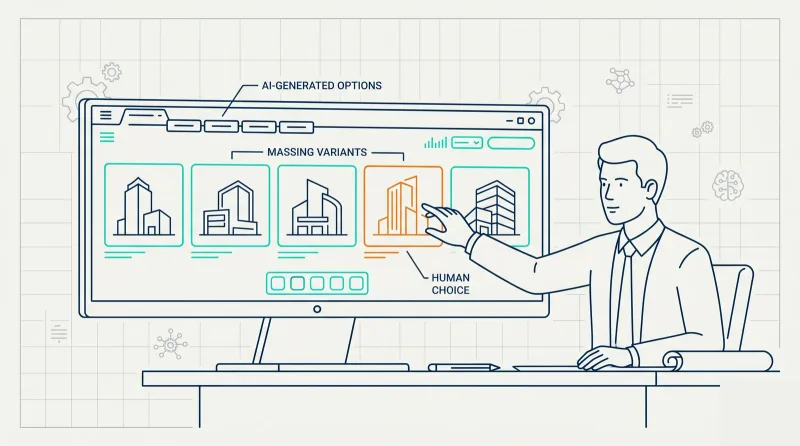
For each priority task we score the options against the agreed criteria, including a process change without AI and no change. In a working session, your leadership team picks the priorities with the scores and the costs in front of them.
Roadmap, policy, and the first review
We present the opportunity map, the scored options, the 24-month roadmap, and the AI policy to your leadership. The deliverables are yours to keep. If you move ahead with Managed AI, your fee is credited toward it, and the roadmap is tracked at every quarterly strategy review.
How We Interview
The rules we hold ourselves to
The interviews collect facts. They do not test anyone, and they do not sell anything.
- We ask about the work first. Nobody names a tool, a product, or a solution until the wish-list questions at the end of each interview.
- No demos during discovery. A demo changes the answers that follow, so the options are shown after the map is built, not before.
- No information about the people you serve, their families, or your staff. If an example needs it, we stop and ask for a general one.
- We ask for consent before we record. If the person prefers, we take notes only.
- We write down the words the person uses, not our interpretation of them.
- When someone says "AI could do that," we ask what the result must be and how they would check it.
What We Need From You
Light on your team, by design
Most of your time goes to two things: telling us how the work really happens, and choosing the priorities. Your information stays in your environment throughout.
- One interview of 45 to 60 minutes with each leader and each person who leads an area of the work, one at a time or in a small group.
- A short staff survey, sent by you, so the rest of the team has a voice.
- One working session where your leadership picks the priorities with the scores and costs in front of them.
- A main contact who agrees the criteria with us, coordinates the schedule, and can join the interviews.
The Investment
$5,000
A flat fee for the full engagement: the interviews, the survey, the opportunity map, the scored options, the roadmap, and the policy. Credited toward Managed AI if you proceed, and yours to keep either way. We confirm scope on the free call first.
What Is Not Included
Building the roadmap out, fixing existing IT gaps, and any software or licensing are scoped separately. Execution is your call: with us, in-house, or another provider. And if AI is not the right move yet, the roadmap says so.
Priority is the IT foundation, not AI yet? Our Strategic Technology Assessment covers that side.
Why Resolved
A rare intersection
Putting AI to work safely takes two things that rarely sit together: a solid IT and data-governance foundation underneath, and real AI depth on top. We do both, and we proved it on our own business first.
We do not sell tools. We compare them, including the ones you already pay for, and we put a process change or no change on the same scorecard. What you get is a plan measured in outcomes, with the team to execute it if you want us to.
Which One
Not sure which assessment is yours?
Fifteen seconds and you will know.
FAQ
Strategic AI Assessment questions
What is the Strategic AI Assessment? +
A fixed-fee planning engagement. We interview your people about the work, not about tools, survey the rest of the team, score every option against the same criteria, and hand your leadership a 24-month roadmap and an AI policy they chose themselves.
This or the Strategic Technology Assessment, which one is mine? +
If you are rethinking your IT foundation or switching providers, start with the Strategic Technology Assessment. If IT is already handled and you want to know where AI pays off, this is the one. Not sure? Book the free discovery call and we will tell you which one, or neither.
How long does it take, and how does it begin? +
The engagement runs four to six weeks: interviews in the first three, then the map, the scoring, the working session, and the presentation. It starts with a free 30-minute discovery call to confirm it is the right fit. The roadmap it produces spans the following 24 months.
Who do you need to talk to? +
Your leadership team and the people who lead each area of the work, one person or a small group at a time, 45 to 60 minutes each. Most frontline staff give input through the staff survey. Your main contact joins the interviews if they want to and coordinates the schedule.
Which AI tools do you compare? +
For each priority task: the Microsoft 365 tools you already pay for, premium Copilot, Claude, a custom tool built for the task, a process change without AI, and no change. Each option is scored against the same seven criteria, so the comparison is fair and you can see why one wins.
Do you demo tools during the assessment? +
Not during discovery. A demo changes the answers people give, so we ask about the work first. Once the opportunity map is built and your priorities are chosen, we show the shortlisted options against real tasks.
Do we decide what to build, or do you? +
You do. We bring the map, the scores, and our judgment on what is feasible for your organization today. Your leadership team picks the priorities in a working session, with the costs in front of them. It is your plan, not ours.
What do we walk away with? +
Four deliverables, yours to keep: the AI opportunity map, the scored options for each priority task, a 24-month roadmap with a conservative estimate of the return, and an AI usage policy with an adoption plan.
How do you protect our information during the assessment? +
The interviews use general examples only. We do not collect information about the people you serve, their families, or your staff, and we ask for consent before we record anything. Privacy and compliance is one of the seven scoring criteria, so an option that fails your contract or accreditation requirements is out, whatever else it scores.
What if the assessment finds AI is not the right move for us yet? +
Then the roadmap says exactly that. "AI is not a good fit" is a valid result for a task, and some organizations need the data and IT foundation fixed first. We would rather sequence you honestly than sell a project the evidence does not support. That is also why the deliverables are yours to keep either way.
Start Here
Get a plan your team can execute
It starts with a free 30-minute discovery call: where your organization is headed, and whether the assessment fits. No pressure.
The AI usage policy and governance framework are operational guidance, not legal or insurance advice. We recommend review by your own professional advisors.